
Repair guide · 06
No obvious cause?That is the service call.
Troubleshooting is the work of narrowing a symptom to its source through questions, observation, safe testing, circuit tracing, and verification—not guessing and replacing parts.
The process
Diagnose before recommending.
Buckeye Electric’s original service-call page made the distinction clearly: investigation and troubleshooting are service work. That time is used to understand the system, reproduce or isolate the symptom, and explain the practical repair choices.
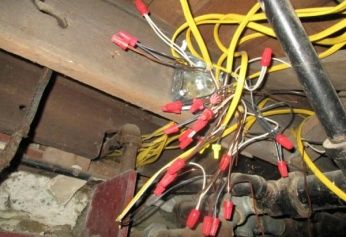
The process may include checking supply voltage, protection, loads, connections, devices, grounding, continuity, insulation condition, and circuit routing as appropriate to the problem.
Useful clues
Details reduce guesswork.
Electrical faults often have patterns. Note the time, weather, equipment in use, sounds, smells, affected rooms, breaker behavior, and anything that changed before the issue began.
- Intermittent power or lights that flicker without a clear cause
- Breakers or GFCIs that trip repeatedly
- Equipment that works on one circuit but not another
- Problems following remodeling, storms, water, or previous repairs
Before we arrive
Preserve the evidence safely.
Avoid changing multiple devices, moving wires, or repeatedly resetting protection before the visit. Those changes can remove clues and create new problems.
Text a short timeline and safe photos. If there is heat, smoke, active arcing, burning odor, shock, or damaged service equipment, stop using the affected system and request urgent help.
Safety resource
Read the source guidance.
Repair · explain · verify
Tell us what is happening.
Text your name, address, a short description, and safe photos for the fastest start.